
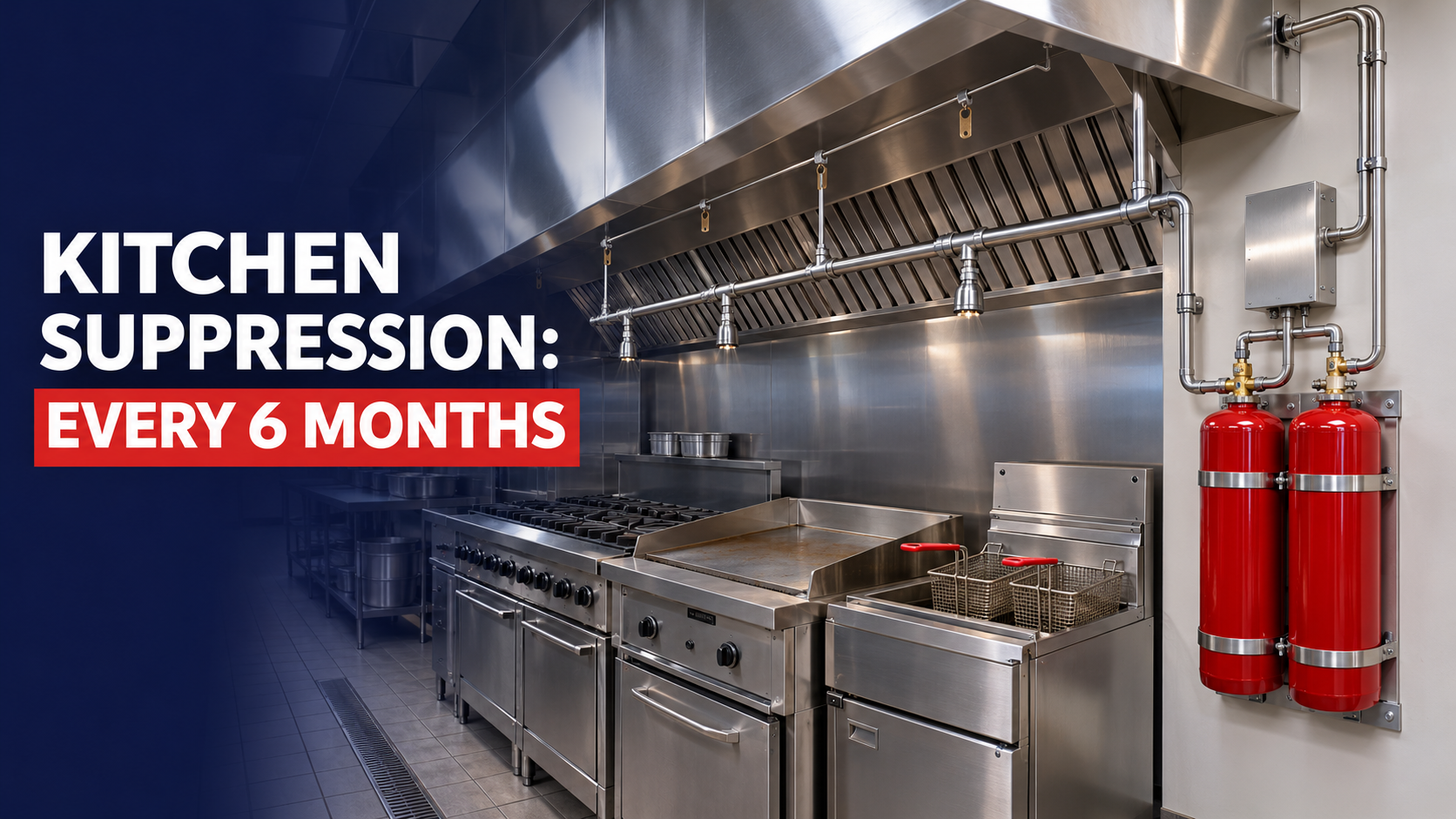
The system above your cooking line has one job: put out a grease fire before it gets into the hood and duct. It can only do that if the nozzles still match the appliances underneath.
What the code requires
Article 2.6.1.9 of the National Fire Code of Canada 2020 says commercial cooking exhaust and fire protection systems must be used, inspected and maintained in conformance with NFPA 96. Wet chemical systems follow NFPA 17A, which calls for maintenance at least every 6 months, and after any discharge. The same article says instructions for setting the system off by hand must be posted in the kitchen, as part of the fire safety plan. The owner keeps the service records.
The article also says hoods, filters, fans and ducts must be cleaned often enough that grease doesn't build up. The code's explanatory note suggests cleaning at least every 12 months, and at least every 3 months for deep fat frying, char-broiling and similar cooking.
What the technician checks
- Each nozzle points at the appliance it protects and has its cap, which keeps grease out.
- The heat-sensitive links that set the system off are replaced.
- The manual pull station and the gas shut-off are tested, so the fuel stops when the system goes.
- The cylinder pressure and dates are checked.
- The appliances under the hood are the same ones the system was set up for.
What you can do between visits
- Keep the manual pull station clear and make sure staff know where it is.
- If you move, add or replace an appliance under the hood, book a check before you cook on it.
- Keep the posted instructions where staff can see them.
Questions
We changed a fryer for a char-broiler. Does that matter? Yes. Nozzles are aimed and sized for each appliance. A change can leave the new one unprotected until the system is adjusted.
Is hood cleaning part of this visit? No. Hood and duct cleaning is separate work, on its own schedule.
What happens if the system discharges? Call us. NFPA 17A calls for maintenance after any discharge, before you cook under it again.
Book your kitchen suppression service online, and your request goes to the member that serves your city.
Call 1-833-344-3473, email service@firecanada.ca or visit www.firecanada.ca.
Source: National Fire Code of Canada 2020, Article 2.6.1.9 and Note A-2.6.1.9.(3); NFPA 96; NFPA 17A-2017.